Italian Sweets That Aren't Tiramisu: Discovering the Regional Cakes of Italy
While Tiramisu often steals the spotlight on dessert menus across the globe, Italy’s regional baking tradition is far more diverse, storied, and structurally impressive than a simple coffee-soaked sponge. From the high-altitude bakeries of the north to the sun-drenched kitchens of Tuscany, Italian cakes—or dolci—are a testament to local ingredients, historical trade routes, and a deep-seated respect for artisanal craftsmanship.
At Carluccio’s, we believe that the true soul of Italian dessert culture is found in its "leavened" masterpieces. These are not your typical soft-crumb sponges; they are cakes of character, patience, and history. If you are looking to explore the heights of Italian baking, here is a deep dive into the regional icons that define the Italian sweet tooth.
The Milanese Masterpiece: Panettone
If Italian baking had a king, it would undoubtedly be the Panettone. Originating from Milan, this tall, dome-shaped cake is the result of a laborious, multi-day curing process that is more akin to sourdough bread-making than standard baking.
The secret to a true Panettone lies in the lievito madre (mother yeast). This living culture gives the cake its signature airy, cloud-like structure and a slight, sophisticated tang that balances the richness of the butter and egg yolks. A genuine Panettone is never dense; it should be light enough to pull apart by hand in long, vertical shards.
Traditionally, the dough is studded with high-quality raisins and candied orange and lemon peel, providing bursts of citrus that cut through the buttery crumb. In Italy, the arrival of the Panettone marks the beginning of the festive spirit. It isn't just a dessert to be eaten at the end of a meal; it is a social event. It is sliced vertically, shared amongst friends, and often served with a generous dollop of mascarpone cream or a glass of sweet, sparkling Moscato d’Asti.
The Golden Star of Verona: Pandoro

While Milan claims the Panettone, the city of Verona offers a formidable rival: the Pandoro. Literally translated as "golden bread," its name is a nod to the rich, yellow hue of the interior, achieved through an incredibly high proportion of egg yolks and butter.
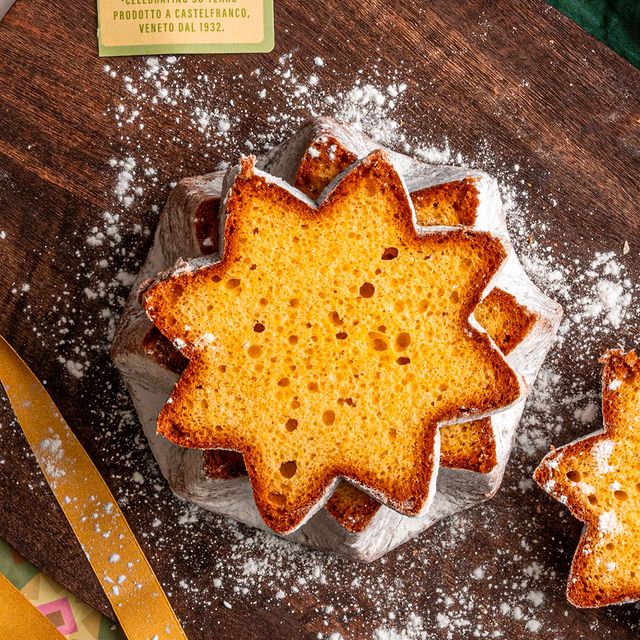
Visually, the Pandoro is a showstopper. It is baked in a specific, high-sided tin that gives it a distinctive eight-pointed star shape. Unlike the Panettone, the Pandoro contains no candied fruits or raisins. It is a purist’s cake, focusing entirely on the quality of the dairy and the delicacy of the vanilla-scented crumb.
The ritual of eating a Pandoro is as famous as the cake itself. It typically arrives with a separate sachet of vanilla-infused icing sugar. The sugar is poured into the bag with the cake, which is then shaken vigorously until the golden star is completely coated. When sliced horizontally, each piece looks like a snowy star, making it the most photogenic centrepiece of the Italian festive table. It is soft, velvety, and melts on the tongue in a way that few other cakes can replicate.
The Ancient Spice of Siena: Panforte
For those who find the airy textures of Northern cakes too light, the Panforte of Siena offers a dense, intense, and ancient alternative. This is a cake that tastes of history. Dating back to at least the 13th century, Panforte was originally a "strong bread" (fortis) created for the Tuscan aristocracy and the clergy.
It is a compact, chewy masterpiece that eschews flour and eggs in favour of a rich bind of honey and sugar. The cake is packed to the brim with whole toasted almonds, hazelnuts, and a complex medley of candied fruits—traditionally melon and citrus. However, what truly sets Panforte apart is the spezie (spice) mix. A blend of cinnamon, cloves, nutmeg, and even a hint of black pepper gives it a warm, lingering heat that is incredibly sophisticated.
Because it is so rich, Panforte is not served in large wedges. Instead, it is cut into thin, elegant slivers. It is a robust cake that pairs exceptionally well with a strong espresso or a glass of Vin Santo, the traditional sweet dessert wine of Tuscany.
Why the Italian Approach to Cake is Different
In Britain, we often associate "cake" with a moist, tiered sponge covered in buttercream. The Italian regional tradition, however, is built on the philosophy of preservation and texture.
Cakes like the Panettone and Pandoro were designed to last throughout the long winter festivities. Their high fat content and natural fermentation mean they remain delicious for weeks, evolving in flavour over time. They represent a "slow food" approach to dessert—where the quality of the flour, the provenance of the butter, and the patience of the baker are the most important ingredients.
Even when these cakes aren't being served as a formal dessert, they find a place in daily life. It is entirely common in Italy to see a slice of leftover Panettone lightly toasted and served for breakfast with a caffè latte, or used as a base for an indulgent bread and butter pudding.
Bringing the Italian Bakery Home
At Carluccio’s, we take pride in sourcing these artisanal cakes from producers who still honour these regional methods. Our Panettone, Pandoro, and Panforte are the signature specialities of our online deli.
Because these cakes are highly seasonal and produced to exacting standards, we bring them to our online "shelves" specifically for the Christmas season. This ensures that when they arrive at your door, they possess the freshness, aroma, and delicate texture that Antonio Carluccio himself would have demanded. They are more than just a sweet treat; they are a direct link to the regional heart of Italy.