What's The Difference Between High Quality Panettone and Cheaper Versions?
Why Artisan-made Panettone Beats Mass-Produced Every Time
As the festive season approaches, supermarket shelves fill up with stacks of panettone. To the untrained eye, they all look fairly similar: tall, dome-shaped, and wrapped in bright boxes. Yet, prices can range from a few pounds for a budget supermarket version to significantly more for an artisan bake.
If you have ever wondered why there is such a difference, it all comes down to what goes on behind the bakery doors. True Italian panettone is not a basic cake—it is an extraordinary feat of culinary engineering.
Here is exactly what sets a high-quality, artisan panettone apart from the mass-produced, cheaper imitations.
1. The Time: 80 Hours vs. High-Speed Mixers
The single biggest difference between luxury and budget panettone is patience.
-
The Cheap Version: Industrial factories use fast-acting commercial yeasts and chemical additives to force the dough to rise in just a few hours. This aggressive process results in a dense, crumbly texture that goes stale almost the moment you open the plastic wrap.
-
The High-Quality Version: True artisan panettone cannot be rushed. At Carluccio’s, our master bakers use lievito madre (a natural mother yeast starter) that has been carefully nurtured and kept alive for decades. The entire leavening process takes up to 80 hours of slow, meticulous fermentation. This three-day labour of love creates those long, feathery strands of dough that pull apart like a cloud.

2. The Cooling: Gravity vs. Conveyor Belts
Once a panettone leaves the oven, the battle for the perfect texture isn't over.
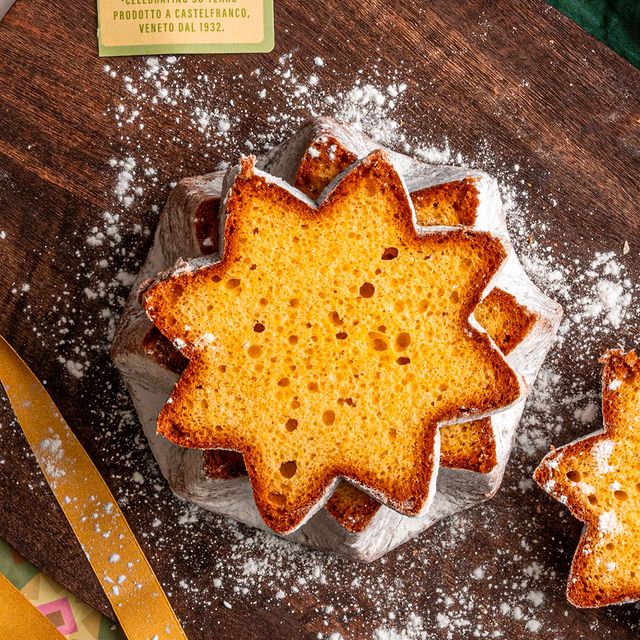
Because artisan dough is incredibly rich in butter and highly aerated, it is structurally delicate. As soon as they are baked, master bakers skewer the loaves and hang them completely upside down for hours to cool. This prevents the majestic dome from collapsing and keeps the interior exceptionally light and fluffy.
Mass-produced versions skip this delicate, space-consuming step entirely, letting the heavy cakes cool upright on factory conveyor belts, which compresses the crumb into a heavy, bread-like texture.
3. The Ingredients: Real Butter vs. Cheap Substitutes
Under strict Italian law, a bake must meet specific ingredient thresholds to legally be called "Panettone". However, industrial versions often push these rules to the absolute limit.
-
The Butter and Eggs: Budget versions frequently swap out premium ingredients for cheaper vegetable oils, margarine, or powdered egg substitutes. High-quality bakes rely solely on mounds of real, rich creamery butter and fresh egg yolks, giving the crumb its signature deep-golden hue and melt-in-the-mouth richness.
-
The Fruit filling: Cheaper options often use generic, sulfur-treated raisins and bitter, hard bits of turnip dyed to look like fruit. Artisan versions use plump, naturally sweet sultanas and vibrant, aromatic candied citrus peels—such as those sourced from Calabria for our Panettone Tradizionale. Every bite should offer a burst of zesty sweetness, not a sugary crunch.
-
The Finish: Many mass-produced variants leave the top completely bare. A premium Milanese classic, however, is beautifully crowned with a traditional, crunchy hazelnut glaze for a fantastic contrast in texture.
The Italian Way to Serve: To fully appreciate the quality, don't slice your panettone with a heavy knife. Do as the Italians do: slightly warm the loaf near a gentle heat source to soften the premium butter, and tear it apart by hand to follow the natural, delicate fibres of the slow-proven dough.
Whether you prefer the classic citrus and fruit profile of our Panettone Tradizionale, a decadent alternative studded with premium dark pieces like our Panettone al Cioccolato, or the bright coastal notes of our Panettone al Limoncello, investing in craft means investing in a slice of genuine Italian heritage. You'll find them all (and more!) in our online deli this Christmas!